A meaningful community project should never begin with the question, “What activity should we organize?” It should begin with a much more important question: “What problem are we trying to solve?”
For JCI Davao, meaningful community action starts with understanding the people, the issues they face, and the opportunities that can create lasting change. Through the JCI Action Framework, members are encouraged to look beyond immediate problems, understand community needs, design appropriate solutions, and turn ideas into action.
This approach is what transforms a simple activity into a meaningful project.
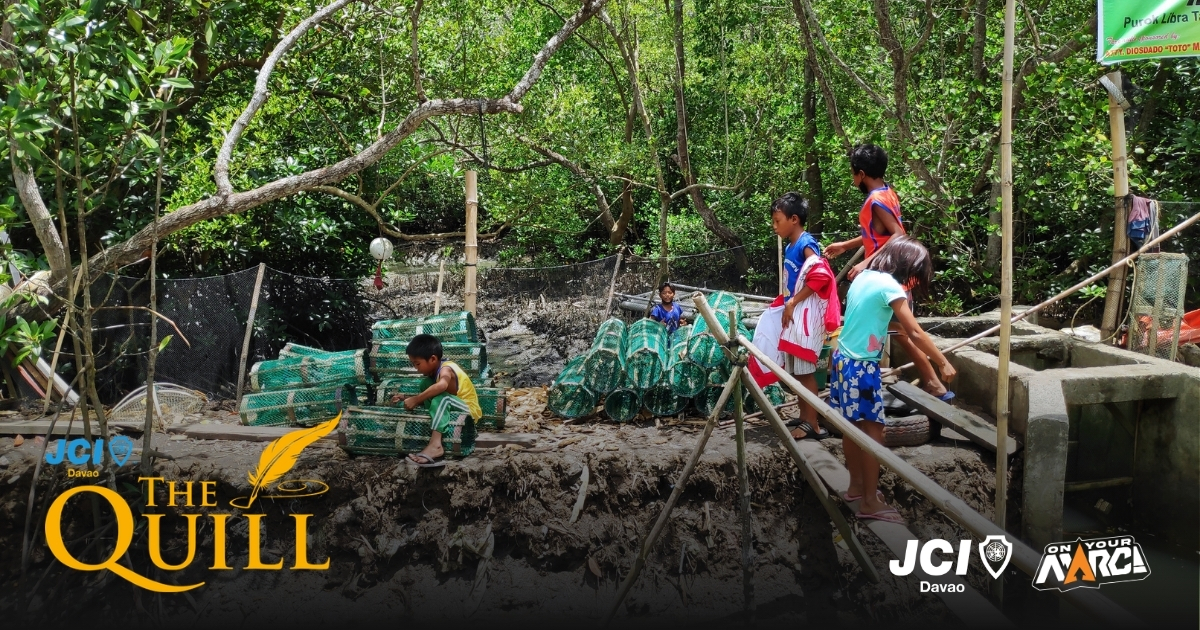
One example is Project Grab Crab, a JCI Davao initiative that began in 2021 with a simple but significant community need: creating sustainable livelihood and economic opportunities for fisherfolk in Tambongon.
What started with teaching a community how to make crab traps from locally available materials eventually grew into a broader, self-sustaining livelihood initiative involving crab production, fish, clams, oysters, and other marine products.
The story of Grab Crab provides a useful lesson for anyone who wants to turn a community problem into meaningful action.
1. Start With the Community, Not the Activity
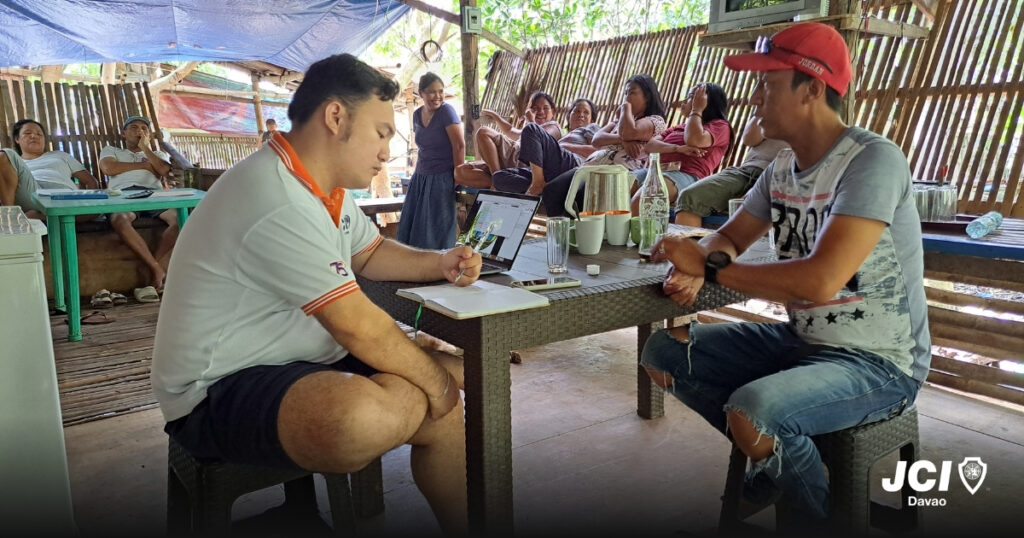
One of the easiest mistakes in community development is starting with an activity and then looking for a community where it can be implemented.
A tree planting project is planned, so we look for somewhere to plant trees. A feeding program is organized, so we look for beneficiaries. A livelihood project is proposed, so we find people who might participate.
The JCI approach starts differently.
Before deciding what to do, members need to understand what the community actually needs.
This can happen through direct community engagement, consultations, observation, research, and assessment of available data. The objective is to understand the situation from the perspective of the people experiencing it.
JCI Philippines emphasizes this process as part of developing solutions and translating ideas into action through the JCI Action Framework.
For JCI Davao, this means asking questions such as:
- What challenges are people experiencing?
- What resources are already available?
- What skills already exist within the community?
- What opportunities are being missed?
- What prevents the community from solving the problem themselves?
- What kind of intervention could create sustainable change?
The answers to these questions can reveal opportunities that aren’t immediately obvious.
Don’t start by asking what project you can do. Start by asking what the community needs.
2. Look Beyond the Immediate Problem
Identifying a community need is only the beginning. The next challenge is understanding what lies underneath it.
Consider Project Grab Crab.
The community’s challenge wasn’t simply that fisherfolk needed crabs. The deeper issue was livelihood and economic opportunity.
The community had access to marine resources and possessed existing knowledge of their environment, but additional skills, materials, training, and support were needed to turn those resources into a more sustainable source of income.
That distinction matters.
If JCI Davao had approached the situation as simply “the community needs financial assistance,” the intervention might have ended with a one-time donation.
Instead, the project looked at how the community could develop the capacity to create its own livelihood.
That shift—from providing something to building capability—is one of the most important distinctions between short-term assistance and sustainable community development.
3. Build on What the Community Already Has
Effective community projects don’t necessarily bring an entirely new solution into a community.
Sometimes, the best solution is already there.
It simply needs to be developed.
For Grab Crab, the Tambongon Fisherfolk Association, or TAMFIAS, already had a connection to the marine environment. The intervention began in 2021 by teaching members how to create crab traps using locally available materials.
This was a practical starting point.
Instead of introducing an expensive or highly technical system that would be difficult to maintain, the project began with resources and capabilities that were accessible to the community.
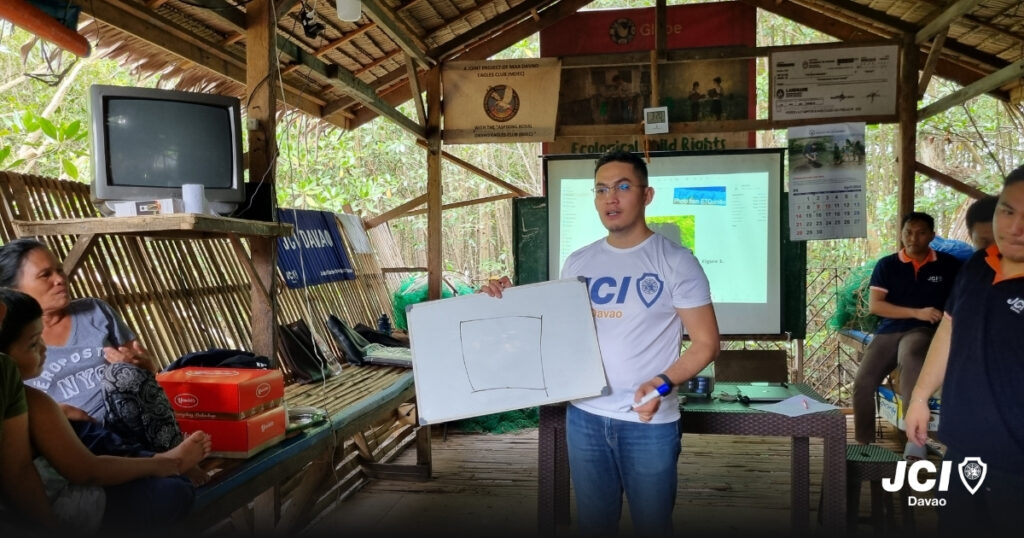
From there, JCI Davao and its partners continued providing training, materials, and other forms of support based on the community’s evolving needs.
This is an important principle in community development:
The community should not simply receive a solution. It should become capable of sustaining it.
4. Design the Community Project Around the Real Need
Once the problem is understood, the next step is designing an intervention that directly addresses it.
For Grab Crab, the solution wasn’t limited to crab production.
The project eventually involved multiple interventions designed around the community’s livelihood and environmental conditions.
These included:
- Training in crab production and trap-making
- Provision of materials and technical support
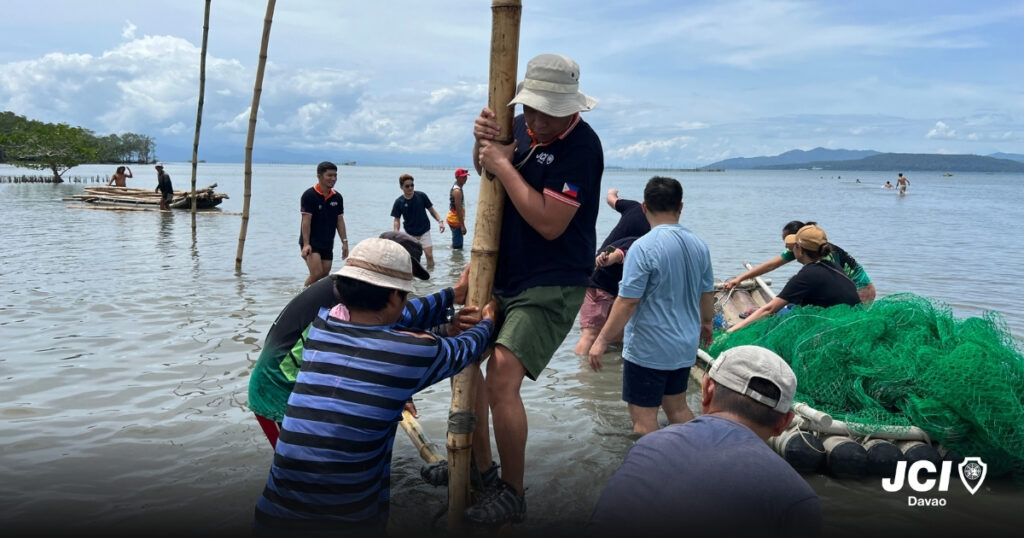
- Installation of nets for crab nurseries
- Makeshift sea barriers to reduce the amount of trash reaching the shoreline
- Coastal cleanups
- Accounting training
- Support for expanding into other marine products
These interventions addressed more than one part of the problem.
Livelihood development required production. Production required a healthy environment. Sustainability required proper management of resources. And a growing livelihood required financial and accounting skills.
This is where project design becomes important: community problems are rarely isolated.
A good project considers the different factors that influence the problem and develops a solution that responds to those realities.
5. Don’t Be Afraid to Collaborate
No community organization can solve every problem alone.
JCI Davao’s role in Grab Crab was strengthened by working with other organizations, partners, and the community itself.
Partnerships can provide resources, technical expertise, training, equipment, networks, and other forms of support that a single organization may not possess.
But partnerships should not simply be about collecting logos for a project proposal.
The better question is:
“Who needs to be involved for this solution to work?”
That might include government agencies, private companies, technical experts, academic institutions, nonprofit organizations, community associations, or other JCI organizations.
JCI’s global approach similarly emphasizes partnerships and collaboration as important tools for creating community impact.
For project leaders, this means learning how to communicate a community’s needs clearly and finding partners whose capabilities can help address those needs.
6. Measure More Than the Number of Beneficiaries
A project can reach hundreds of people and still fail to create lasting impact.
That’s why measuring success requires more than counting participants.
Ask:
- Did people’s capabilities improve?
- Did their income or opportunities improve?
- Did the community become more self-reliant?
- Did the intervention address the original problem?
- Did the community gain something that will remain after the project ends?
- Can the community continue the initiative without depending entirely on the organization?
Grab Crab provides a powerful example.
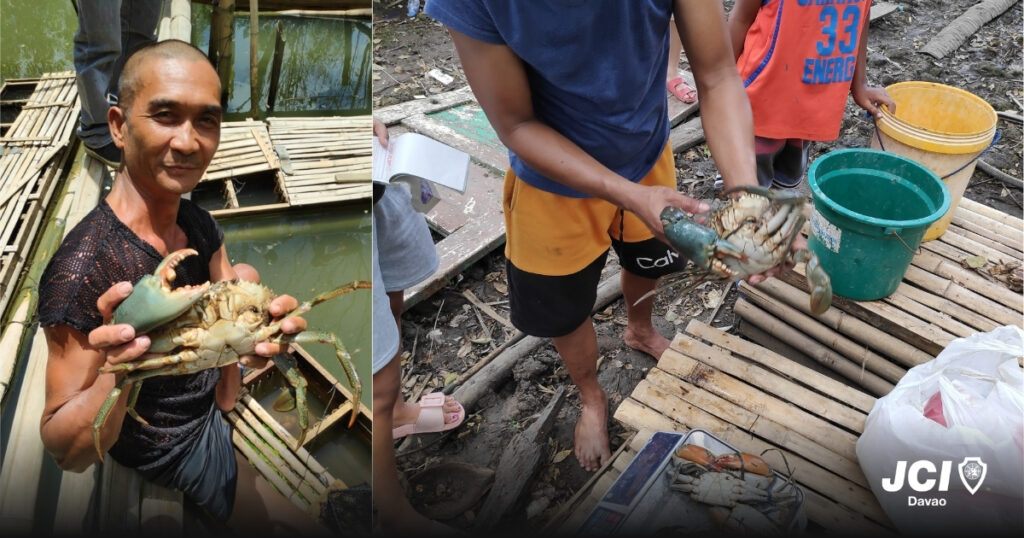
The project began with crab production, but TAMFIAS eventually expanded its livelihood activities to include fish, clams, oysters, and other marine products.
Today, the community has become more self-sustaining, demonstrating how an intervention can evolve beyond its original scope when the community gains the knowledge, resources, and confidence to continue developing the initiative.
That is a very different measure of success from simply saying, “We distributed X number of materials.”
7. Plan for the Day JCI Is No Longer There
One of the most important questions a project leader can ask is:
“What happens when we leave?”
A project shouldn’t create permanent dependence on its organizers.
Instead, the goal should be to gradually transfer knowledge, skills, resources, and ownership to the community.
This is why sustainability should be considered from the beginning—not added as an afterthought.
Grab Crab illustrates this progression. What began with JCI Davao and partner interventions eventually developed into a community initiative that TAMFIAS could continue managing and expanding.
The ultimate goal of a community project is not for JCI to remain indispensable.
It is for the community to become more capable because JCI was there.
The best project is not the one the organization has to keep running forever. It is the one the community eventually learns to sustain on its own.
From Community Need to Community Ownership
The journey from identifying a problem to creating sustainable change can be summarized simply:
Listen → Understand → Design → Collaborate → Act → Measure → Sustain
This is the spirit behind the JCI Action Framework and the philosophy that guides meaningful community action.
For JCI Davao, the experience of Project Grab Crab demonstrates how this process can work in practice.
A community identified with a livelihood challenge did not simply receive financial assistance. Instead, the intervention focused on building skills, creating economic opportunities, protecting the surrounding environment, strengthening management capabilities, and eventually developing a more diversified and self-sustaining livelihood.
The project continues to evolve because the community itself has evolved.
And that may be the most important lesson of all.
What Makes a JCI Project Meaningful?
A meaningful JCI project is not necessarily the biggest project, the most expensive project, or the one with the most participants.
It is a project that responds to a genuine need, develops people, creates meaningful partnerships, and leaves the community better equipped to face its challenges.
JCI Davao has implemented projects across education, environment, health, livelihood, leadership development, and other areas of community development. You can explore more initiatives through the organization’s community projects.
Each project may look different. But behind the activities is a common question:
How can we create change that lasts?
That is where meaningful community development begins.
And for the next JCI member who sees a problem and thinks, “We should do something about this,” the next step isn’t necessarily to start planning an event.
Start by listening.
Understand the problem.
Talk to the people affected.
Look at what they already have.
Find the right partners.
Design a solution with them—not simply for them.
Then turn that solution into action.
Because in JCI, we don’t simply organize projects. We develop leaders who learn how to create meaningful change.
By The Quill Editorial Team
The Quill is JCI Davao's official publication that shares stories of impact, leadership and progress.